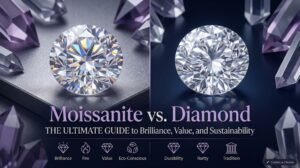
Choosing between moissanite and lab-grown diamonds can be challenging. In this Moissanite vs Lab Diamond comparison, we explore the differences in brilliance, durability, affordability, and overall value. Whether you’re shopping for an engagement ring or everyday jewelry, this guide will help you choose the gemstone that best suits your lifestyle and budget.
Affiliate Disclosure Statement:
This site contains affiliate links to products. We may receive a commission for purchases made through these links at no extra cost to you.
Here is a side-by-side comparison to help you choose the ideal stone for your budget and lifestyle.
| Feature | Moissanite | Lab-Grown Diamond |
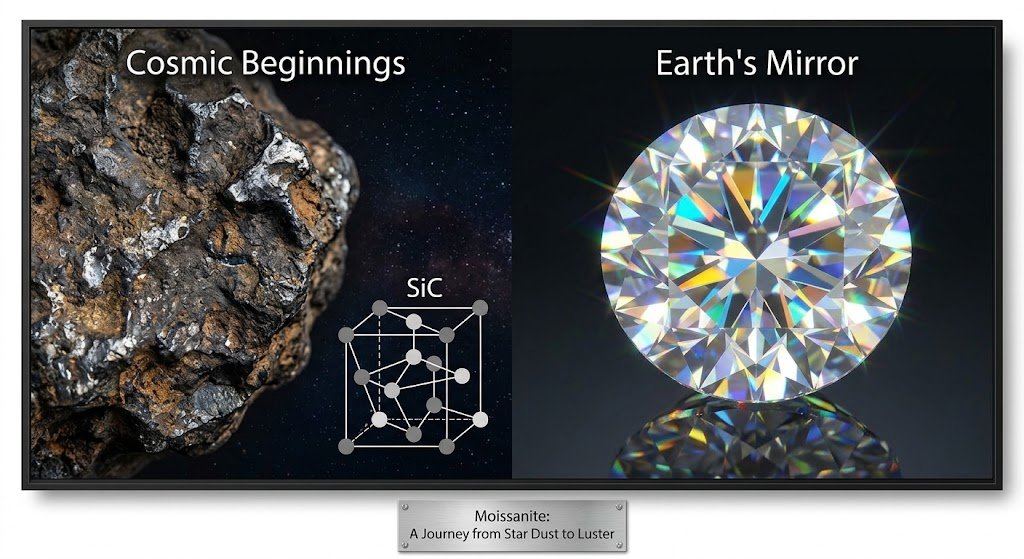
| Chemical Composition | Silicon Carbide (SIC) | Pure Carbon (C) |
| Origin | Created in lab (originally from space meteorites) | Created in lab (duplicates natural diamond growth) |
| Durability (Mohs Scale) | 9.25 / 10 | 10 / 10 |
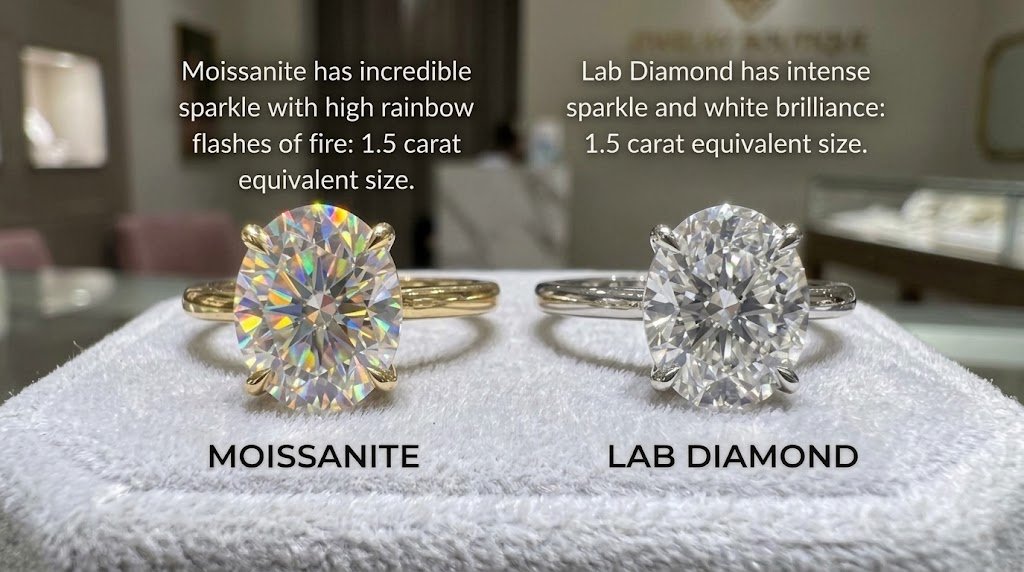
| Brilliance & Sparkle | Refractive Index: 2.65–2.69 (Rainbow “Disco Ball” effect) | Refractive Index: 2.42 (Classic white flash + fire) |
| Price Point | Approximately $300-$600 per carat | Approximately $800-$1500+ per carat |
Looking for more beautiful jewelry inspiration? Explore our guide to 8 stunning moissanite bracelets for elegant, affordable sparkle.
Moissanite vs Lab Diamond: Origins and Differences
- Moissanite: Natural moissanite was first discovered in 1893 by French scientist Henri Moissan inside a meteor crater. Because natural space moissanite is extremely rare, all moissanite used in jewelry today is synthesized in high-tech laboratories.
- Lab-Grown Diamond: Lab diamonds are chemically, physically, and optically identical to mined diamonds. They are grown using advanced technological processes—either High Pressure High Temperature (HPHT) or Chemical Vapor Deposition (CVD)—that simulate the intense heat and pressure beneath the Earth’s mantle.
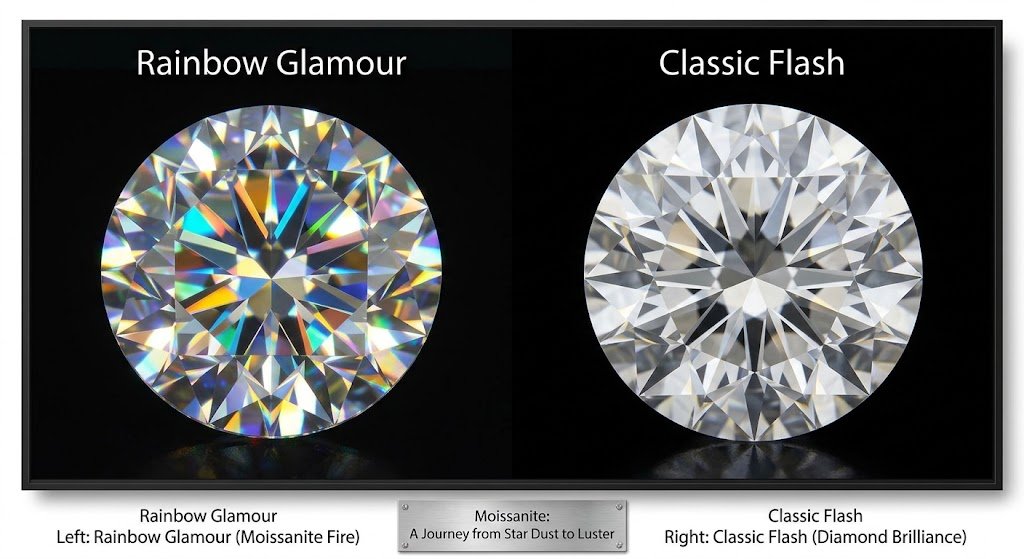
Brilliance and Fire: Rainbow Glamour vs. Classic Flash
- Moissanite: Known for its high Refractive Index (2.65–2.69), moissanite bends light more than a diamond. It displays intense, multicolored flashes of light (often called the “rainbow effect” or “disco ball effect”), especially in bright sunlight.
- Lab-Grown Diamond: Lab diamonds reflect light through a combination of white light flashes (brilliance) and colored light flashes (fire). They offer the signature, classic diamond shimmer rather than intense rainbow refraction.
Durability: Built for Everyday Wear
- Moissanite: Scoring 9.25 on the Mohs Hardness Scale, moissanite is the second-hardest gemstone used in jewelry. It is highly resistant to scratching, chipping, and daily wear and tear.
- Lab-Grown Diamond: Scoring a perfect 10 on the Mohs Scale, diamonds are the hardest substance on Earth. A lab-grown diamond provides the highest level of scratch resistance possible for daily wear.
Price and Value
- Moissanite: Offers maximum size and sparkle for budget-conscious shoppers. Prices are primarily based on physical dimensions (millimeters) rather than weight, typically costing around 10% to 15% of a natural diamond.
- Lab-Grown Diamond: Priced significantly lower than mined diamonds (often 60% to 80% less), but more expensive than moissanite due to the complex technology required to replicate pure carbon crystal structures.
Which Option Fits Your Lifestyle?
- Choose Moissanite if: You want maximum brilliance and size within a modest budget, love eye-catching rainbow reflections, and prefer a modern gemstone with extraterrestrial origins.
- Choose a Lab-Grown Diamond if: You want a true diamond in every physical and chemical sense, prefer classic white sparkle, and want maximum scratch resistance for decades of daily wear.
Love the brilliance of moissanite? Explore the beautiful collection of moissanite rings, earrings, necklaces, and bracelets at Bee-Bees, where timeless elegance meets affordable luxury.