The Complete Guide for First-Time Buyers
Affiliate Disclosure Statement:
This site contains affiliate links to products. We may receive a commission for purchases made through these links at no extra cost to you.
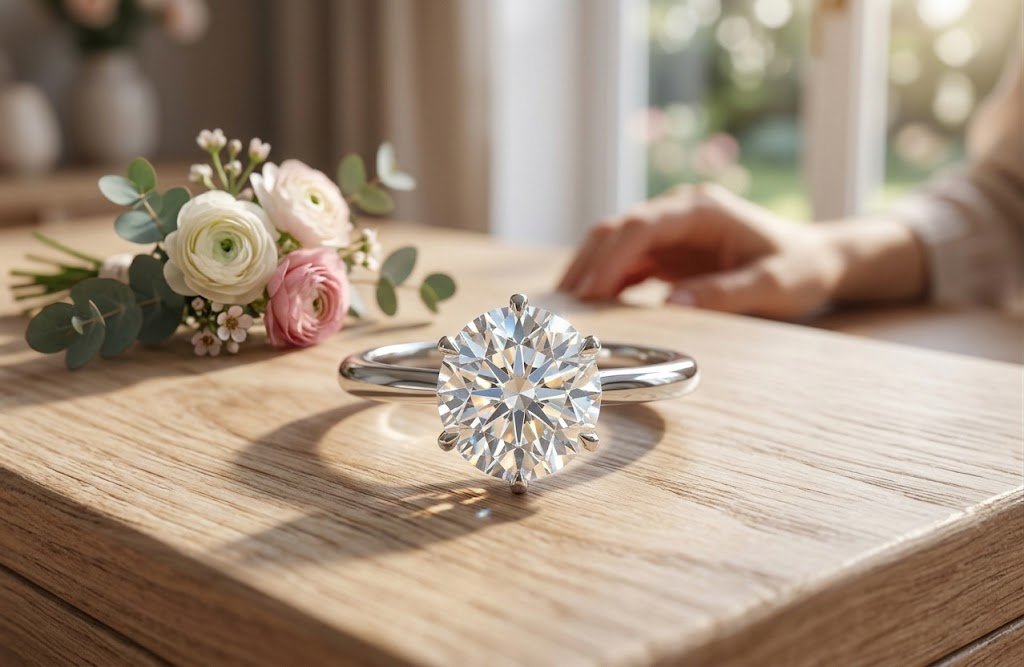
If you are shopping for fine jewelry or an engagement ring, you have likely come across moissanite. Once a hidden gem in the jewelry world, moissanite has grown rapidly in popularity as a brilliant, durable, and budget-friendly alternative to traditional mined diamonds.
This complete guide breaks down everything you need to know before making your first purchase.
What Is Moissanite?
Moissanite is a naturally occurring mineral composed of silicon carbide. First discovered in 1893 by French scientist Henri Moissan inside a meteor crater, natural moissanite is extraordinarily rare.
Because natural specimens are too microscopic for gemstone use, virtually all moissanite used in modern jewelry is created in high-tech laboratories. This lab creation process ensures a gemstone that is conflict-free, environmentally conscious, and optically clear.
Moissanite vs. Diamond: Key Differences
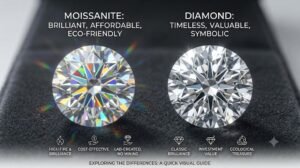
While moissanite resembles a diamond at first glance, it is an entirely distinct gemstone with its own unique optical and physical properties.
| Property | Diamond | Moissanite |
| Chemical Composition | Pure Carbon ($C$) | Silicon Carbide ($SiC$) |
| Hardness (Mohs Scale) | 10 | 9.25 |
| Refractive Index (Brilliance) | 2.42 | 2.65 – 2.69 |
| Fire (Dispersion) | 0.044 | 0.104 |
| Refraction Type | Singly Refractive | Doubly Refractive |
| Relative Cost | High | Low (typically ~90% less) |
Why Choose Moissanite?
Unmatched Brilliance and Fire
Moissanite reflects light exceptionally well. Because its refractive index and dispersion score are higher than a diamond’s, moissanite produces distinct, colorful flashes of light—often called the “rainbow effect” or “disco-ball effect.”
Extreme Durability
Rating a 9.25 on the Mohs hardness scale, moissanite is harder than sapphire, ruby, and emerald. It resists scratching and chipping, making it suitable for daily wear in engagement rings and everyday jewelry.
Budget Flexibility
A moissanite gemstone generally costs a fraction of a diamond of equivalent size and quality. This allows buyers to allocate their budget toward larger stone sizes, custom settings, or higher-quality metals like platinum or 18k gold.
Key Considerations for First-Time Buyers
- Color Grading: Opt for colorless grades (D, E, F) for the crispest, white appearance that mimics a high-grade diamond.
- Carat vs. Size: Moissanite is approximately 10% lighter than diamond by weight. Jewelers typically list moissanite using millimeters ($mm$) or Diamond Equivalent Weight (DEW) rather than actual carat weight.
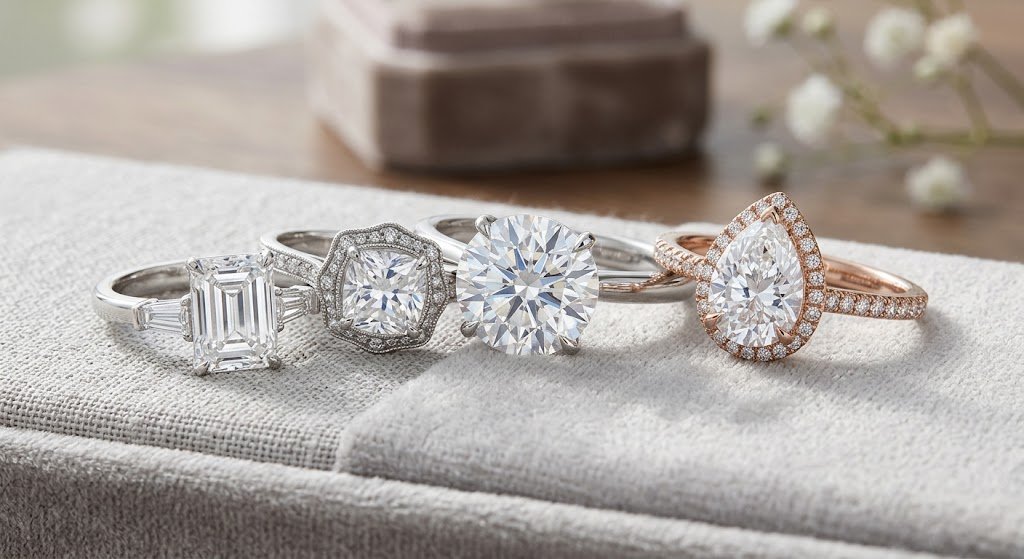
- Stone Size & Fire: The signature rainbow flashes become more pronounced in larger stones (above 1.5 to 2 carats). If you prefer a subtler sparkle, stick to classic shapes under 2 carats or choose step cuts like Emerald or Asscher.
Final Takeaway
Moissanite is not a “fake diamond”—it is a durable, brilliant, and ethically created gemstone in its own right. For buyers seeking maximum sparkle, high durability, and strong value, moissanite offers a modern alternative for fine jewelry.
Ready to find the perfect ring that matches your style and values? Explore our handcrafted collection of ethically sourced moissanite and custom engagement rings at Bee-Bees.